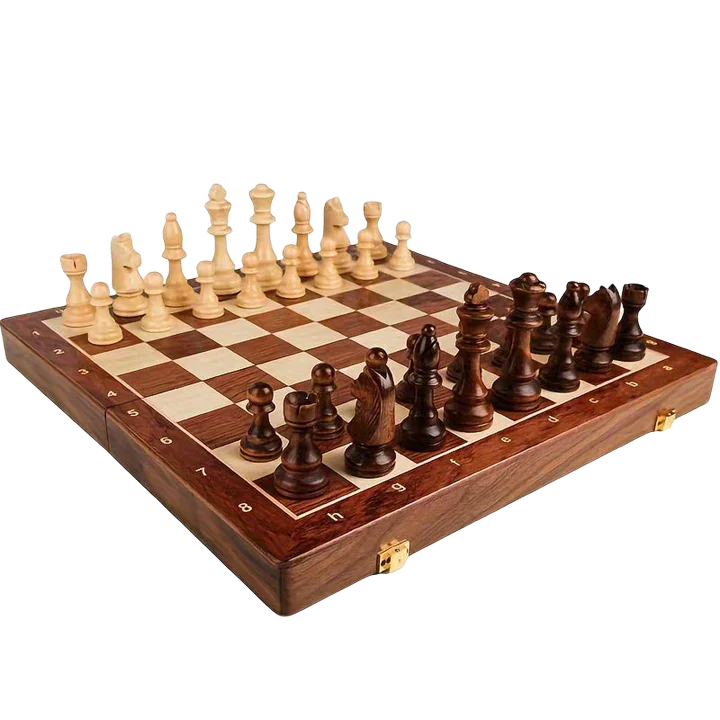
Sheesham — known botanically as Dalbergia sissoo and commonly called Indian Rosewood — is one of the most important hardwoods in South Asian craft. It grows abundantly across northern India, including in and around Uttar Pradesh where our workshop is based, and it has been used by craftsmen for furniture, musical instruments, and decorative objects for at least four centuries.
What makes Sheesham special
Sheesham is dense. A cubic foot of dry Sheesham weighs around 52 pounds — heavier than oak, lighter than ebony. That density translates to durability. A Sheesham chess board handled daily for a decade will show wear at the edges and develop a rich patina, but it will not split, warp, or lose structural integrity under normal conditions.
It is also naturally oily. The wood contains natural resins that give it some moisture-resistance even before finishing. This is one reason Sheesham has always been a preferred material for kitchenware in India — it tolerates the humidity and temperature swings of a kitchen far better than many imported hardwoods.
The grain is the most immediately striking feature. Sheesham grain is interlocked and slightly irregular, which means it catches light from multiple angles. No two pieces of Sheesham look identical. This is a feature, not a defect — it is the material's signature.
Sheesham vs. other woods we use
Acacia (Kikar): Lighter in colour, slightly harder, and with a more uniform grain. We use Acacia for boxes and smaller objects where a cleaner look is preferred. It machines beautifully and takes brass inlay work very well.
Mango: A softer, more affordable hardwood that we use for serving trays, small organisers, and items where a golden-brown tone works better aesthetically. Mango has a wide, open grain that holds oil well.
Maple: We import small quantities of maple for chess board contrasting squares. Maple is very pale, tight-grained, and hard — it provides excellent contrast against the darker Sheesham.
How to care for your Sheesham piece
All our Sheesham pieces are finished with food-safe mineral oil. Caring for them is straightforward:
- Oil once a year (or more often if you notice the wood looks dry or pale). Apply food-safe mineral oil with a cloth, let it soak in for 20 minutes, then wipe off the excess.
- Wipe up spills promptly. Sheesham is moisture-resistant but not waterproof. Prolonged soaking will raise the grain.
- Keep away from direct heat. Placing a Sheesham board on a hot stove or in direct sunlight for long periods will cause surface checking.
- Never put Sheesham in a dishwasher. The heat and water will cause warping and will strip the oil finish completely.
A well-maintained Sheesham piece darkens gradually over the years and develops a warm, mellow patina. This is the material aging well. Our oldest surviving workshop samples are over twenty years old and look better than they did when first made.
See Sheesham in our collection
Our chess sets, serving trays, and game pieces are made with the Sheesham described here. Every piece is unique — no two grain patterns are the same.
Browse the collection